

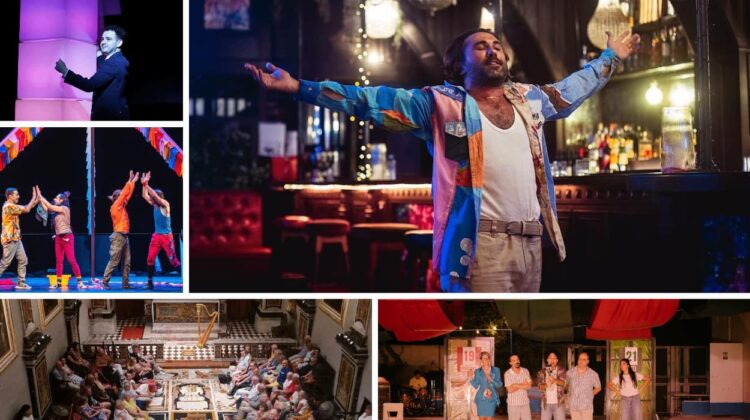
Top left, clockwise: Mid-Djarju ta’ Student fi Skola tal-Knisja; What’s Their Names Theatre’s Shakespeare; Boċċi The Musical; The Caravaggio Experience; Bonġu Bejt. Photos: Facebook
The majority of Maltese shows don’t last beyond two weekends. But a handful have defied the norm, playing to packed houses night after night. I spoke with some of those who have cracked the formula in an attempt to understand whether the rest of the sector can follow.
Key takeaways
- Most shows in Malta last between three nights to two weekends, with only a handful of exceptions exceeding six nights.
- Turning a production into a financially viable concern requires time, but many shows are killed off before reaching this stage.
- A production’s longevity needs to be planned from inception, factoring in venue adaptability, infrastructure, audience profile and cost.
- Plays that are relatable, and that tap into shared cultural experiences are likely to be better suited for longevity than experimental ones.
- Word of mouth can be more powerful than marketing, with long runs allowing time for the buzz to build organically, reaching audiences that might miss shorter runs.
- The popularity factor cannot be discounted, and well-known names can help attract different audience profiles.
- Language matters, with shows that bridge Maltese and English-speaking audiences attracting broader and more diverse demographics.
Table of Contents
Three solid nights. That’s the best case scenario local theatre producers could hope for up till a few years ago. Sure, we did see exceptions of longer, more successful theatre runs – panto and Comedy Knights being the most notable two. But, for the most part, those rare occasions when a play ran for two weekends in a row were considered a huge gamble that could tip the balance between breaking even and making a loss.
This still rings true for most Maltese theatre-makers. Except that now, the status quo is being challenged by a number of producers and directors that use a very different strategy as their starting point. And that starting point is longevity.
The current poster-play (if you’ll excuse the wordplay) for longevity is probably Mid-Djarju ta’ Student fi Skola tal-Knisja, penned and performed by Jamie Cardona, and directed by Vikesh Godhwani. It opened on April 25 last year, and currently has a scheduled run up till October 17.
Every single night is invariably sold out and, as Vikesh tell me, there are plans to open up new dates even after October. This is not a unique case, and I’ll be taking a look at other productions that have also pushed longevity boundaries. But it remains rare enough to warrant continuous media attention even on platforms that aren’t primarily culture-oriented. And, the production team has every intention of keeping it going.
“The plan is to run it, as long as there’s a demand,” Vikesh tells me with a smile. “Initially, we had planned a six-night run, and now we’ll be hitting 100 in October.”
Is there a secret, ‘theatre longevity’ gene’?
So, what’s the secret? I chat to Vikesh for more than an hour, but throughout our conversation we never stumble on the one ingredient that can be definitively described as the longevity gene.
Some elements do stick, though, and Vikesh’s directorial decisions top this list. Stripped to its core, Mid-Djarju is a hilarious monologue. But under Vikesh’s direction it becomes a multi-character rollercoaster, with the internal voice of god becoming a separate character in its own right.
The result is a larger-than-life set, taking inspiration from TV and film, and including features like LED lighting, projection mapping and lightning-fast costume changes. Driving the directorial process was always that one, all-important question: will the audience find it boring?
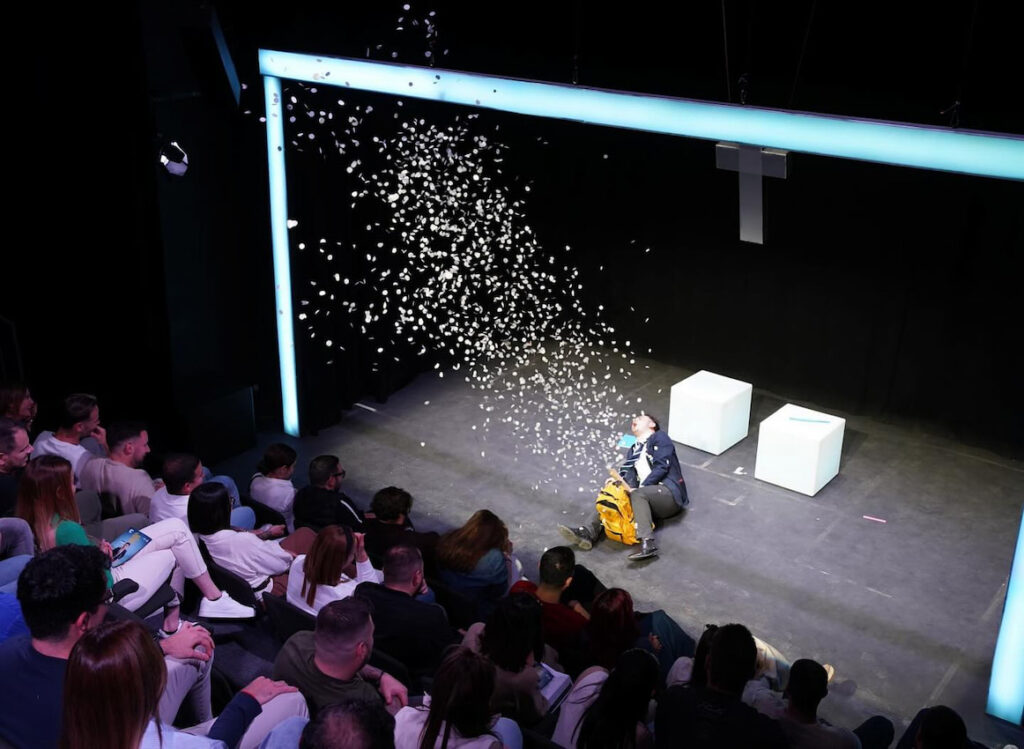
“With this type of script, some directors might have stripped back. But we wanted spectacle. At the end of the day, if I’m enjoying it there’s a chance that others will. If I’m bored, the audience will probably get bored as well,” Vikesh says.
A second factor was the fact that the cast and crew were all friends, and willing to take risks and see where the script would take them.
“Everyone was open to trying things, no matter how out-of-the-box. Sometimes, with more experienced crews, creative anxiety takes over and people take the safe route. You end up discussing things in a loop, and not actually doing them. For Mid-Djarju, we tried out the most outrageous ideas, and if they didn’t work out, we just moved on to the next one,” Vikesh acknowledges.
‘You can’t make a show with the explicit aim of selling tickets’ – Philip Leone Ganado
There’s no disputing that Jamie’s play is hugely popular – but what comes first? The structure of the play, or the deliberate creation of something that’s likely to attract mass attention? For actor, director and producer Philip Leone Ganado, it starts off with artistic and logistical choices that aren’t necessarily made to attract an audience. If that happens, he considers it a happy side effect.
“Obviously, you have to sell tickets or you can’t make a show. But, at the same time, I don’t think you can make a show with the explicit aim of selling tickets. At least not in my area of theatre. You’re always going to be one step behind audience tastes,” he asserts.
It might be a bit of a chicken-and-egg question, but there’s no denying that Philip’s work with his company What’s Their Names Theatre (WTNT) managed to crack the formula. This year marks 10 years of Shakespeare productions that the troupe approaches in the most improbable of ways.
It all started in 2015 with Two Gentlemen of Verona at The Pub in Valletta. Since then it’s been a slew of Shakespeare’s least popular plays (with some exceptions) for WTNT – and each year, the 20+ shows are sold out.
Despite Philip’s objections, I maintain that Shakespeare is not an easy sell to the eclectic Maltese demographic that WTMT productions attract. Granted, MADC’s annual offering also sells out, but the run is limited to (give or take) eight shows, with the audience following the expected profile. Is there a formula, or is it all down to a “happy side effect”? Turns out, the answer may be a bit of both.
Removing the barriers to entry
“Our approach is deceptively simple. The core elements were all present in the first pub show, though we’ve obviously grown, improved and refined significantly over the years,” Philip acknowledges.
The first element is the unconventional venues that deliberately stay away from the grand, beautiful theatrical spaces people often associate Shakespeare with.
“This draws people in with the promise of something different, but it also puts them off balance when they sit down. We know what to expect when the lights go down in a theatre; not so much when an actor pops out of a swimming pool or from behind the bar in a pub,” he says with a smile.
Secondly, the production is limited to a small cast of actors playing multiple roles.
“This foregrounds the theatricality of what we’re doing, rather than hiding it. It’s playful, and engages the audience in the game of artistic creation, without actually presenting it to them. Audience members often highlight absurd quick changes as some of their favourite parts of the show.”
Contemporary costumes and music add to the appeal, reducing the disconnect audiences often feel with the “men-in-tights approach”.
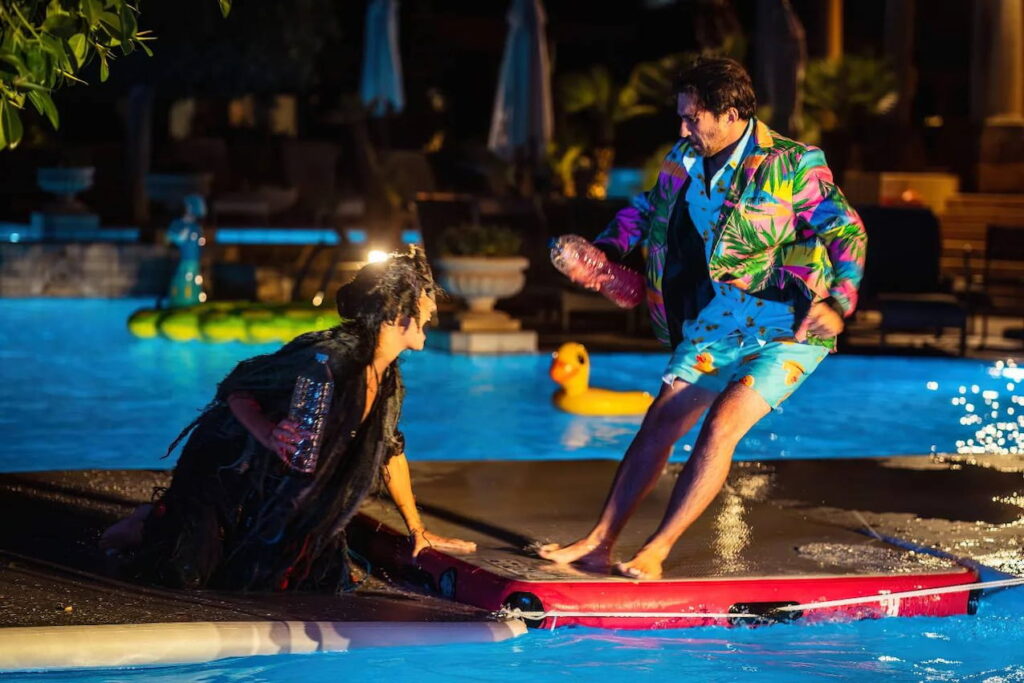
“We also use live music, played and sung by the actors, far more than most (including our now trademark opening and closing numbers). Not radical, but definitely engaging. And then we add audience participation,” he continues, while acknowledging that this can easily turn into a gimmick if not handled well.
“But for us, it starts with always speaking to the audience, not at them. They’re not people watching a show, they’re present with the characters in each scene. Then, it occasionally expands to picking an audience member to play a small part or deliver some lines. It keeps the audience on their toes, so they feel like they’re truly part of the performance with us.”
Bringing all this together is a commitment to clarity in storytelling and delivery. Not everyone may be familiar with the peculiarities of Shakespearean dialogue. But a WTNT production always ensures that the audience fully understands what’s happening, regardless of their background or previous familiarity with Shakespeare. The result can be seen in the numbers that eagerly flock to watch, year after year. Still, Philip maintains that it’s not about the numbers.
“It’s more about trying to get a few people through the door each time, people who would enjoy what I’m making if they gave it a chance. So it’s about trying to find out what their barriers to entry are, and trying to overcome them,” he concludes.
💡 Your chance to see What’s Their Names Theatre in action: Shakespeare The Pub Trilogy runs till August 3 – very few seats left.
The troupe is presenting three of Shakespeare’s finest, this time at the Victoria Pub in Valletta. Each night has two sittings, and the plays are Two Gentlemen of Verona, Twelfth Night and Much Ado About Nothing. If the mere thought of a sonnet scares you, these are presented as 90-minute adaptations performed by the same cast of eight actors playing multiple roles across all three plays. And there’s booze. Tickets here.
Shifting from venue availability to longevity
Philip’s approach would require a shift in thinking that many Maltese theatre-makers are yet to embrace. But such radical shifts are also part of the natural evolution of seeing the theatre industry grow – something that actor, director and producer Toni Attard has not only acknowledged, but also successfully implemented in many of the shows that he produces under the umbrella of his arts production company, Udjenza.
“Historically, a show’s run is created with theatre availability as a starting point. You book your three days at a venue and you’re tied to the dates given to you. It’s very difficult to think of longevity with a production if the end goal is just tied to the limited available dates of a venue. But what if I shift my point of departure away from the venue and towards a show that can be staged for a long period of time?” he asks.
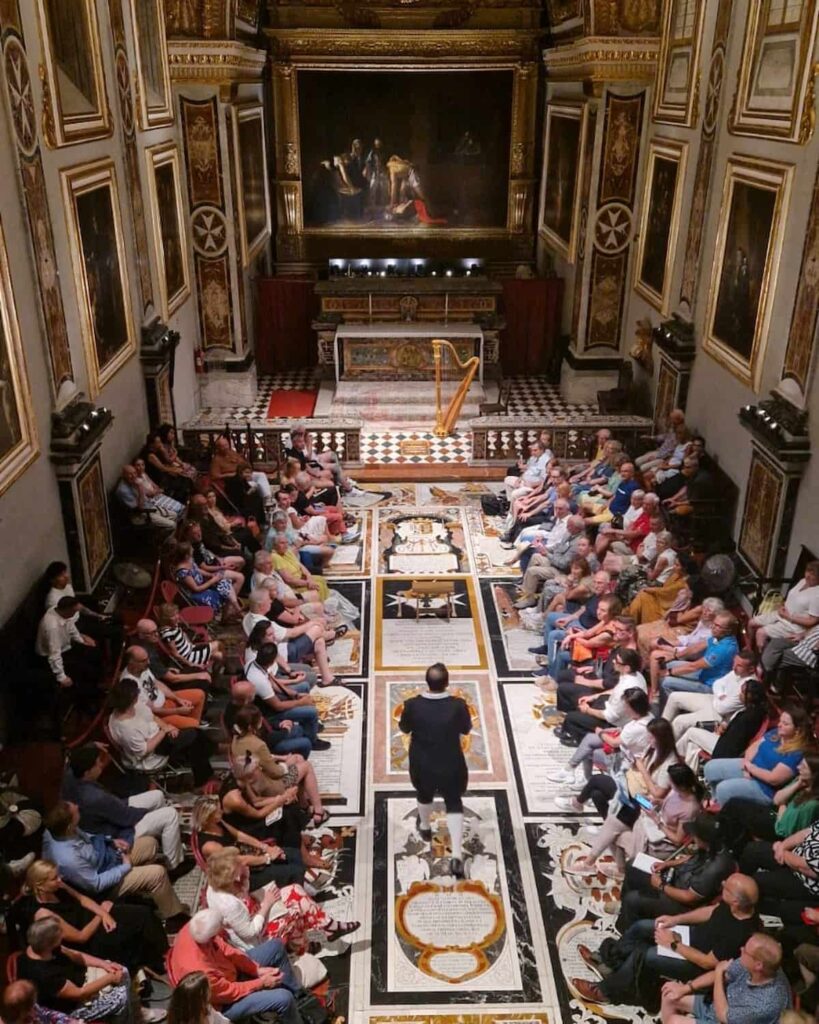
Toni has managed to implement this with considerable success in productions like Valletta Resounds: The Caravaggio Experience, which is also now close to its 100th show. Likewise, Paramm Paramm spent a year in Research & Development before being taken to the stage for a full run at Theatre Next Door. Now, it’s in the process of being developed into a 13-episode TV production, because theatre longevity can take many formats.
Toni plans to follow this strategy for other upcoming shows like The Sunshine Girl, a musical theatre piece inspired by a troupe of queer performers that took Malta by storm in the 1980s.
‘Many productions are killed off before they can reach profitability’ – Toni Attard
But is there a benefit to this longevity, apart from the personal satisfaction of a long-running show? Yes, starting with the most obvious one, which is profitability.
“Each time you create a new production it’s like you’re launching a start-up. The expenses are extremely high – at a minimum, you’re investing in the venue, costumes, set and equipment. Killing off this investment after three nights just doesn’t make sense,” Toni starts off.
This is why, before even deciding on a show, Toni analyses aspects such as language, type of venue required, set, and infrastructure.
“If these aren’t factored in from the start, then there’s no point attempting to turn the show into a long-running one. Let’s say you’re changing venues everytime. This means you need to rebuild the set and the infrastructure from scratch every time. This in turn requires more time, money, and other practicalities,” he explains.
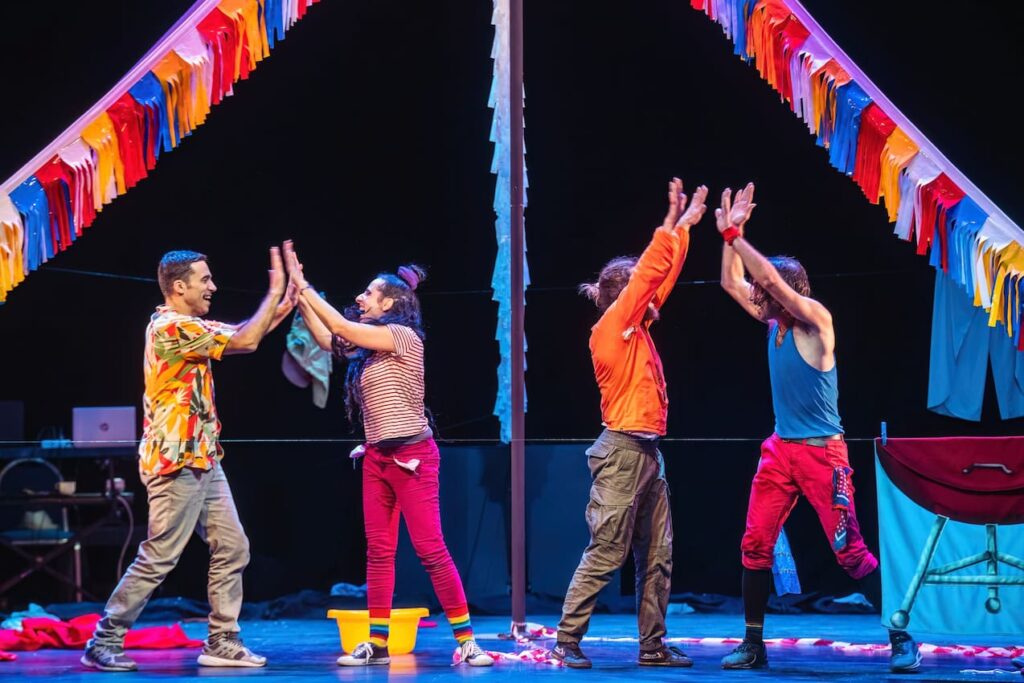
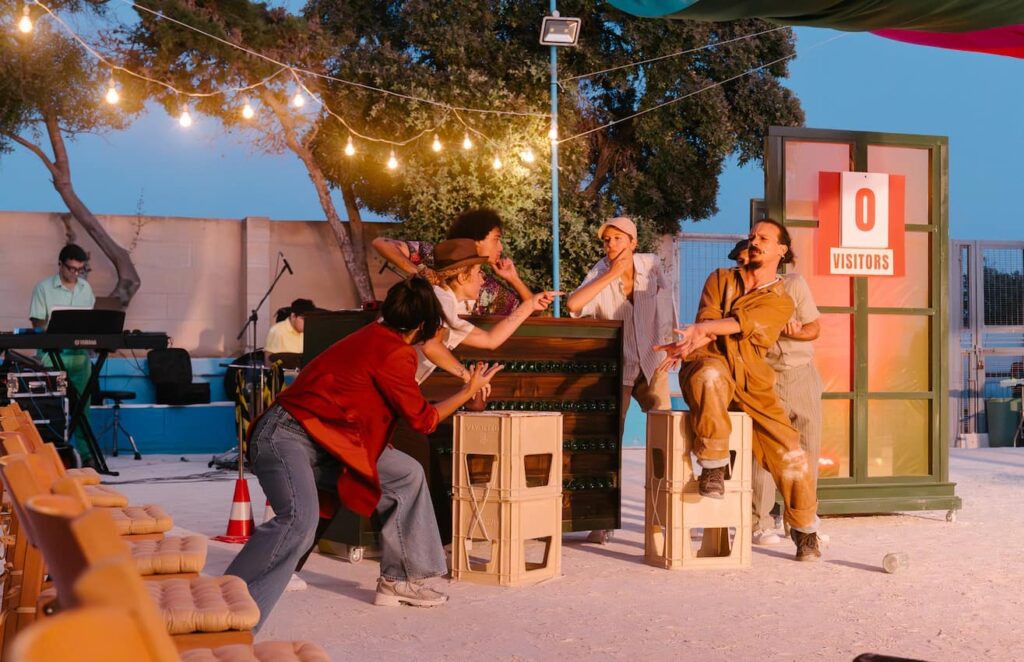
And it’s crucial to accept that not every production is destined for longevity. Toni uses Bonġu Bejt – a circus-inspired performance – as example.
“Originally, the plan was for the show to become repertoire. Then, we realised that no venue had an infrastructure that could support circus acts. We were having to rebuild everything, every time. We couldn’t take the piece abroad, for the same reasons. You do need to factor every single detail in the research and development phase,” he says, adding that the size of the show also makes a difference, given that financial viability also depends on overall costs and markets.
But when the show is planned out with longevity in mind from the very first, it pretty much starts running itself. As the run advances, the production team will only need to iron out admin and stay on top of the marketing. Doesn’t this eventually lead to a stale production? Toni disagrees.
“We receive a lot of invaluable audience insights throughout the run, and we do act on them. In reality you’re always honing the production. However, turning a show into repertoire does carry a significant advantage – the cast knows the piece well and will be able to pick it up without needing a whole six weeks in rehearsal. They literally continue where the previous run would have left off,” he says.
He explains that all theatre productions follow a certain pattern: the first two shows are when everyone is still trying to find their footing – it’s the “running in”, as he playfully refers to it. After a certain number of shows the play matures further, with cast and crew wearing it like a second skin. However, most are killed off before they reach this stage.
“In real terms, how far can a production develop over three nights? On the last night of a short run there’s a saying you’ll often hear among theatre folk – Now, it has settled – Ironically, a show often starts to reach its potential just when it closes, before it settles,” Toni says.
He uses the play Is-Snin Li Tħoss as a concrete example. Initially, it was put it up for a two-weekend run at Spazju Kreattiv, before further runs in Gozo followed.
“We did well at Spazju Kreattiv, but when we staged it again in Gozo it crossed the gap from ‘good’ to ‘great’. Clare [Agius, lead actor] had really settled into that text and made it her own,” he reminisces.
He points out that achieving longevity also means thinking out of the box, especially in terms of audiences. He refers to a specific weekend when Malta saw six concurrent theatre productions taking place, each of these reaching a very high standard.
Although this co-scheduling caused an outcry within the sector, each play enjoyed sold-out seats on most nights.
“Sometimes there are audiences that we’re not even looking at. For instance, for Valletta Resounds I’m mostly targeting foreigners. That’s an entirely new audience to me, but if I had limited it to the Maltese market, I’d have probably been capped at 3,000,” he says, adding that most producers are too stuck in the model of creating as many different shows as they can through the year.
This takes us to another hard truth. The theatre cohort regularly voices concern about audiences not being large enough to turn a production into a commercially viable enterprise. Reality, Toni says, is somewhat different.
“There’s a very good chance that when a play has a very short run, potential audiences only get to know about it after it’s reached the end of its run. This is when word of mouth starts going round. Marketing is all very well and good, but nothing works like a personal testimonial. By the time that happens, a show is usually over,” he states.
The power of word of mouth
Mid-Djarju ta’ Student fi Skola tal-Knisja pretty much proves Toni’s point. Cynics will try to imply that the play’s popularity owes much to the inclusion of male, full frontal nudity.
But the truth is, Maltese theatres have hosted quite a few other plays with both male and female full frontals – Equus, Id-Dnub tal-Magħżulin, and Jien Inħobb, Inti Tħobb among others. While each play was successful in its own right, none of them generated this level of attendance.
So I go back to my conversation with Vikesh, who introduces a new element to the formula: the power of word of mouth.
“All the marketing we did for Mid-Djarju was organic. Sure, there was a surge of noise when someone revealed the full frontal scene on a Reddit thread. But the level of interest we’ve seen goes way beyond the curiosity elicited by this scene – especially given that this is not new to Maltese theatre,” Vikesh says.
There’s another ingredient to the cocktail, which Toni has already mentioned – language. There are two sides to theatre in Malta, and Mid-Djarju bridges both. It has attracted audiences who typically attend English-language shows, as well as those who prefer to see Maltese plays.
“Our audience profile keeps expanding. We have the hardcore theatre-goers; the Maltese-speaking fans of Dan u San; the repeat patrons who know the lines by heart… ” Vikesh says.
This is a hugely wide Venn diagram that many other theatre producers fail to crack. So how did Vikesh and Jamie pull it off? A lot hinges around relatability, which Vikesh believes is more likely to attract large audiences than experimental works.
“Experimental works remain hugely important for a healthy theatre ecosystem, of course. But if the aim is to produce a piece with longevity and an audience that goes beyond niche attendance, you’re going to need topics that everyone gets,” Vikesh explains.
He uses two productions that ran at Spazju Kreattiv as examples. The first is Her Say, Not Hearsay, a theatre project that addressed a range of issues tied to women’s rights. The second is Blanket Ban, which covered the highly-divisive abortion debate.
“Both shows were sold out on all evenings. Why? Because they spoke to women about issues they care about. So we do need to tap these themes that audiences care about or want to see more of,” he elaborates.
Likewise, Mid-Djarju takes two themes that are very relatable to any Maltese member of the audience, irrespectively of age, gender or background – puberty and a Catholic upbringing. Another box ticked.
But all these ingredients – language, theatricality, word of mouth, a willingness to go out of the comfort zone – still needed an extra push. And Vikesh believes that this push is Jamie’s sheer popularity, which also spans different audience profiles.
There’s no denying Vikesh’s statement – and this popularity is reflected in Malta’s very own events calendar. Whether it’s theatre, radio, or a music festival, Jamie’s name has a habit of popping up even in the most unexpected of places. He’s so busy, in fact, that despite low-key spamming his Whatsapp like the terribly uncool Gen-Xer that I am, I didn’t manage to pin him down for a comment. So is popularity necessary for longevity?
“What I can say is that very few artists have a following with audience profiles that are polar opposites. Jamie does, and this has translated into the sheer numbers that we’ve seen attending Mid-Djarju,” Vikesh muses.
The result of all this is a play that has helped take theatre in the Maltese language to corners that otherwise would remain untapped. Vikesh reveals that the production has employed pretty much every freelance theatre creative on the island at some point or another.
“We need a whole backstage crew and we do rotas according to availability. Ultimately, expanding a show’s longevity is also leading to job creation in the sector,” he says.
It’s a philosophy that is gaining ground. Teatru Malta, the country’s national theatre company, was one of the first to promote an approach of longevity and alternative venues likely to attract mixed audiences. In 2022, Il-Qfil u l-Ħelsien Skont Manoel Dimech ran for 10 nights – considered a long run at the time – at the Old Prison in Kordin.
Earlier this year saw 1881 in an extended run that stretched four months, give or take. This summer also saw an incredibly successful five-week run for Boċċi The Musical, which combined the mass appeal of musicals and Maltese-language theatre with a choice of venues that was more likely to attract new punters than a conventional theatre space.
And private producers like Udjenza and Saydon Studio are also experiencing this – the latter’s Il-Każin tal-Imqarbin launched in October 2024. Now, it’s up for a second run in September – most tickets were snapped up as soon as booking opened in July.
‘There are entire audiences that remain untapped’ – Vikesh Godhwani
Vikesh attributes this success not only to long-term planning, but also to the fact that they cater to the audiences they want to attract.
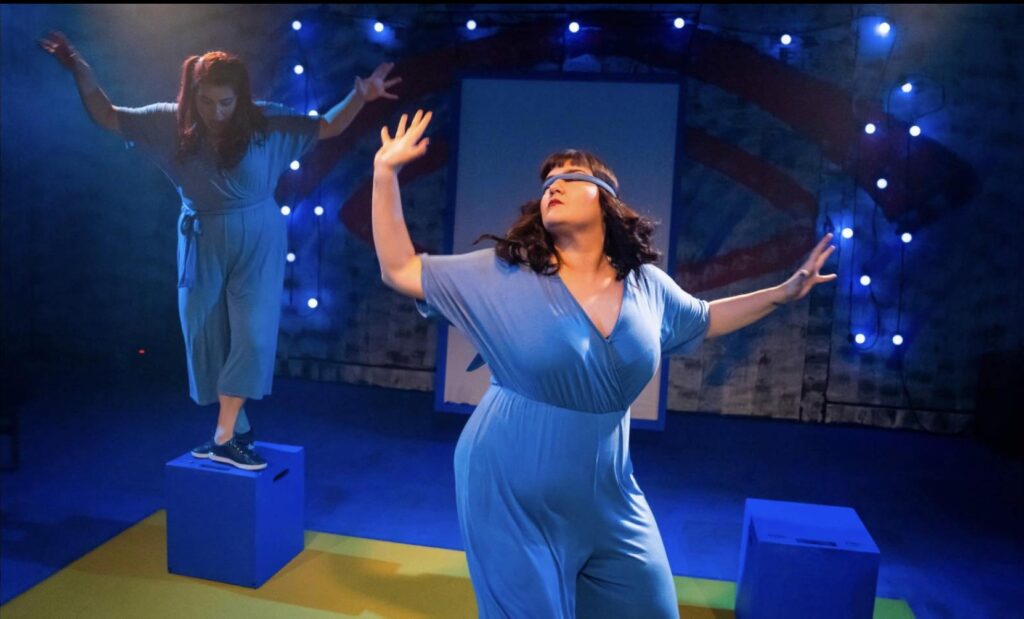
“We need to start tapping audiences that we have not yet fully-leveraged. When we produced Aura: A Musical in the Dark, a large percentage of the audience that attended some performances was blind or visually impaired. This was a type of audience which we hadn’t yet tapped into,” he explains.
His argument also ties in to a stronger need for inclusivity in Maltese theatre, opening the doors to diversity and different communities.
“Malta’s population is changing. A couple of years ago I was mesmerised by a Filipino parade in one of our towns. What would happen if we open the doors of Teatru Manoel to this community and others? You’d have a completely different kind of audience that, to date, remains untapped.”
So what does the future look like for those who would like to see bigger audiences and longer play runs? For Vikesh, it’s a matter of continuing to honour what he enjoys while removing any real or perceived exclusions.
“I’m really excited to be welcomed by a new audience that I thought would never engage with my work. And I intend to continue developing that aspect of my practice. This doesn’t mean I won’t be doing more fringe or experimental work, of course. Something that only a 100 people in a hole-in-the-wall will watch,” he says with a smile.
The turning point for Vikesh came with the realisation that doing one doesn’t exclude also doing the other. And that he can benefit from the potential of both.
It’s a realisation that – when embraced by the ecosystem across the board – can help Maltese theatre make the leap from the perception of belonging only to a niche group of connoisseurs to becoming an activity enjoyed by everyone. And then, we can start looking at a systemic longevity that goes beyond a handful of bold producers.
About the series
This ‘Deep Dives’ series takes an in-depth look at specific themes and issues related to the theatre sector in Malta. We identify the most important challenges that need to be discussed; the success stories that should be celebrated and emulated; the processes that are helping future-proof the industry; and the people who are helping make all this happen.
The aim is not to promote specific productions, but rather to delve into how these contribute – or not – to the sector on a broader scale. We ask questions, we investigate, and we place the spotlight on the challenges that no-one else is discussing. In short, we start a much-needed conversation about the state of play of Malta’s theatre landscape. If you have a specific topic or issue that you’d like to see us tackle, get in touch via email on [email protected].
Affiliate/Advertising Disclaimer: How I Carry Out Reviews
The opinions expressed here are purely my own and the producers/directors interviewed had no input/control over what I wrote. There are no affiliate links contained within this page.To learn more about my policies and my reviewing process, visit my Affiliate/Advertising disclosure page.